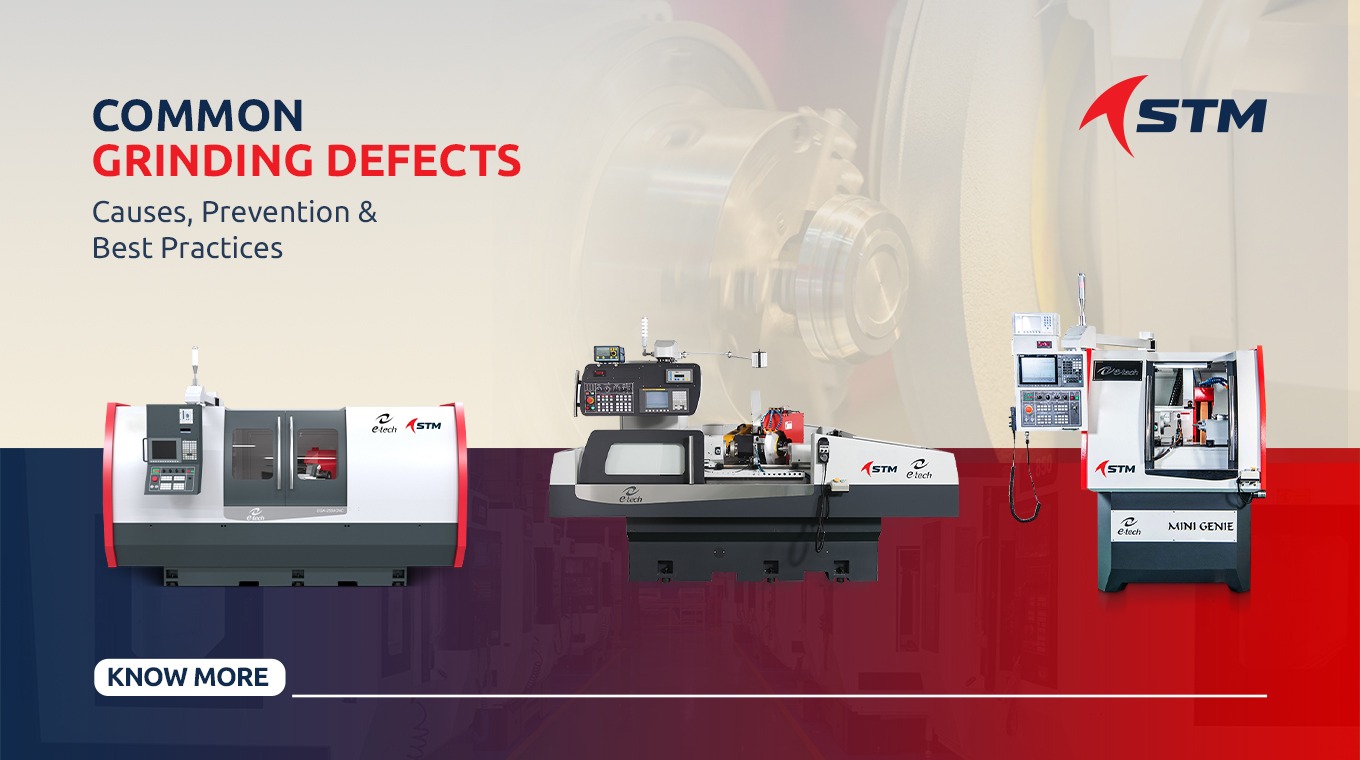
Cylindrical grinding is a precision finishing process that delivers accurate dimensions and superior surface finishes. However, even with advanced grinding machines, defects can occur if machining parameters, wheel selection, or machine conditions are not properly controlled. Identifying these issues early helps manufacturers maintain product quality, reduce rework, and improve production efficiency.
Here are some of the most common cylindrical grinding defects and practical ways to prevent them.
Common Defects of Cylindrical Grinding
1. Poor Surface Finish
A rough or uneven surface finish is one of the most common grinding problems. It can affect component performance, especially in parts that require smooth contact surfaces.
Possible Causes
- Worn grinding wheel
- Incorrect feed rate
- Improper wheel dressing
- Machine vibration
How to Prevent It
- Dress the grinding wheel regularly.
- Optimize feed rate and wheel speed.
- Ensure machine rigidity and proper setup.
2. Chatter Marks
Chatter appears as repetitive wave-like patterns on the workpiece surface and is usually caused by vibration during grinding.
Possible Causes
- Loose workpiece clamping
- Machine vibration
- Unbalanced grinding wheel
- Excessive cutting forces
How to Prevent It
- Secure the workpiece properly.
- Balance the grinding wheel.
- Reduce vibration through regular machine maintenance.
3. Workpiece Burn
Excessive heat during grinding can cause discoloration, surface cracks, or changes in material hardness.
Possible Causes
- Insufficient coolant
- Incorrect wheel specification
- Excessive grinding pressure
How to Prevent It
- Maintain adequate coolant flow.
- Select the correct grinding wheel.
- Use appropriate grinding parameters.
4. Dimensional Inaccuracy
Components that do not meet the required size or tolerance can lead to assembly issues and product rejection.
Possible Causes
- Machine misalignment
- Wheel wear
- Thermal expansion
- Incorrect machine settings
How to Prevent It
- Calibrate the machine regularly.
- Monitor wheel condition.
- Perform in-process measurements.
5. Wheel Loading
Wheel loading occurs when material particles clog the grinding wheel, reducing cutting efficiency and affecting surface quality.
Possible Causes
- Grinding soft materials
- Inadequate wheel dressing
- Incorrect wheel grade
How to Prevent It
- Dress the wheel frequently.
- Use a wheel suitable for the workpiece material.
- Ensure proper coolant application.
Best Practices for Consistent Grinding Quality
Maintaining consistent grinding performance requires good machining practices.
Recommended Practices
- Select the correct grinding wheel.
- Dress the wheel at regular intervals.
- Use proper coolant during machining.
- Check machine alignment and rigidity.
- Inspect finished components regularly.
- Follow preventive maintenance schedules.
These practices help improve surface quality, extend wheel life, and reduce production downtime.
How STM Supports Reliable Grinding Performance
At STM, our CNC cylindrical grinding machines are engineered to deliver stable performance, high precision, and consistent results. With robust machine construction and precision-focused engineering, STM helps manufacturers minimize grinding defects while improving productivity, component quality, and machining reliability.
Frequently Asked Questions
What is the most common cylindrical grinding defect?
Poor surface finish is one of the most common issues and is often caused by wheel wear, improper dressing, or incorrect grinding parameters.
Why do chatter marks occur?
Chatter marks are typically caused by vibration, loose workpiece clamping, or an unbalanced grinding wheel.
How can grinding burns be prevented?
Using adequate coolant, selecting the correct grinding wheel, and avoiding excessive grinding pressure help prevent thermal damage.
Why is wheel dressing important?
Wheel dressing restores the wheel's cutting ability, improves surface finish, and maintains dimensional accuracy throughout the grinding process.